Monday, August 24, 2020

Transcript of Reagan's Farewell Address to American People

 Jan. 12, 1989

My fellow Americans, this is the 34th time I'll speak to you from the Oval Office, and the last. We've been together eight years now, and soon it'll be time for me to go. But before I do, I wanted to share some thoughts, some of which I have been saving for a long time.

It's been the honor of my life to be your President. So many of you have written the past few weeks to say thanks, but I could say as much to you. Nancy and I are grateful for the opportunity you gave us to serve.

One of the things about the Presidency is that you're always somewhat apart. You spend a lot of time going by too fast in a car someone else is driving, and seeing the people through tinted glass - the parents holding up a child, and the wave you saw too late and couldn't return. And so many times I wanted to stop, and reach out from behind the glass, and connect. Well, maybe I can do a little of that tonight.

People ask how I feel about leaving, and the fact is parting is "such sweet sorrow." The sweet part is California, and the ranch, and freedom. The sorrow? The goodbyes, of course, and leaving this beautiful place.

You know, down the hall and up the stairs from this office is the part of the White House where the President and his family live. There are a few favorite windows I have up there that I like to stand and look out of early in the morning. The view is over the grounds here to the Washington Monument, and then the Mall, and the Jefferson Memorial. But on mornings when the humidity is low, you can see past the Jefferson to the river, the Potomac, and the Virginia shore. Someone said that's the view Lincoln had when he saw the smoke rising from the battle of Bull Run. Well, I see more prosaic things: the grass on the banks, the morning traffic as people make their way to work, now and then a sailboat on the river. Reflections at a Window

I've been thinking a bit at that window. I've been reflecting on what the past eight years have meant, and mean. And the image that comes to mind like a refrain is a nautical one - a small story about a big ship, and a refugee, and a sailor.

It was back in the early Eighties, at the height of the boat people, and the sailor was hard at work on the carrier Midway, which was patrolling the South China Sea. The sailor, like most American servicemen, was young, smart and fiercely observant. The crew spied on the horizon a leaky little boat - and crammed inside were refugees from Indochina hoping to get to America. The Midway sent a small launch to bring them to the ship, and safety. As the refugees made their way through the choppy seas, one spied the sailor on deck, and stood up and called out to him. He yelled, "Hello, American sailor - Hello, Freedom Man."

A small moment with a big meaning, a moment the sailor, who wrote it in a letter, couldn't get out of his mind. And, when I saw it, neither could I.

Because that's what it has to - it was to be an American in the 1980's; We stood, again, for freedom. I know we always have but in the past few years the world - again, and in a way, we ourselves - rediscovered it.

It's been quite a journey this decade, and we held together through some stormy seas. And at the end, together, we are reaching our destination.

The fact is, from Grenada to the Washington and Moscow summits, from the recession of '81 to '82 to the expansion that began in late '82 and continues to this day, we've made a difference. Two Great Triumphs

The way I see it, there were two great triumphs, two things that I'm proudest of. One is the economic recovery, in which the people of America created - and filled - 19 million new jobs. The other is the recovery of our morale: America is respected again in the world, and looked to for leadership.

Something that happened to me a few years ago reflects some of this. It was back in 1981, and I was attending my first big economic summit, which was held that year in Canada. The meeting place rotates among the member countries. The opening meeting was a formal dinner for the heads of government of the seven industrialized nations. Well, I sat there like the new kid in school and listened, and it was all Francois this and Helmut that. They dropped titles and spoke to one another on a first-name basis. Well, at one point I sort of leaned in and said, "My name's Ron."

Well, in that same year, we began the actions we felt would ignite an economic comeback: cut taxes and regulation, started to cut spending. Soon the recovery began.

Two years later, another economic summit, with pretty much the same cast. At the big opening meeting, we all got together, and all of a sudden just for a moment I saw that everyone was just sitting there looking at me. And then one of them broke the silence. "Tell us about the American miracle," he said.

Well, back in 1980, when I was running for President, it was all so different. Some pundits said our programs would result in catastrophe. Our views on foreign affairs would cause war, our plans for the economy would cause inflation to soar and bring about economic collapse. I even remember one highly respected economist saying, back in 1982, that "The engines of economic growth have shut down here and they're likely to stay that way for years to come."

Well, he - and the other "opinion leaders" - were wrong. The fact is, what they called "radical" was really "right"; what they called "dangerous" was just "desperately needed." 'The Great Communicator'

And in all that time I won a nickname - "The Great Communicator." But I never thought it was my style or the words I used that made a difference - it was the content. I wasn't a great communicator, but I communicated great things, and they didn't spring full bloom from my brow, they came from the heart of a great nation - from our experience, our wisdom, and our belief in the principles that have guided us for two centuries.

They called it the Reagan Revolution, and I'll accept that, but for me it always seemed more like the Great Rediscovery: a rediscovery of our values and our common sense.

Common sense told us that when you put a big tax on something, the people will produce less of it. So we cut the people's tax rates, and the people produced more than ever before. The economy bloomed like a plant that had been cut back and could now grow quicker and stronger. Our economic program brought about the longest peacetime expansion in our history: real family income up, the poverty rate down, entrepreneurship booming and an explosion in research and new technology. We're exporting more now than ever because American industry became more competitive, and at the same time we summoned the national will to knock down protectionist walls abroad instead of erecting them at home.

Common sense also told us that to preserve the peace we'd have to become strong again after years of weakness and confusion. So we rebuilt our defenses - and this New Year we toasted the new peacefulness around the globe. Not only have the superpowers actually begun to reduce their stockpiles of nuclear weapons - and hope for even more progress is bright - but the regional conflicts that rack the globe are also beginning to cease. The Persian Gulf is no longer a war zone, the Soviets are leaving Afghanistan, the Vietnamese are preparing to pull out of Cambodia and an American-mediated accord will soon send 50,000 Cuban troops home from Angola. 'We Changed a World'

The lesson of all this was, of course, that because we're a great nation, our challenges seem complex. It will always be this way. But as long as we remember our first principles and believe in ourselves, the future will always be ours.

And something else we learned: once you begin a great movement, there's no telling where it'll end. We meant to change a nation, and instead, we changed a world.

Countries across the globe are turning to free markets and free speech - and turning away from the ideologies of the past. For them, the Great Rediscovery of the 1980's has been that, lo and behold, the moral way of government is the practical way of government. Democracy, the profoundly good, is also the profoundly productive.

When you've got to the point where you can celebrate the anniversaries of your 39th birthday you can sit back sometimes, review your life and see it flowing before you. For me, there was a fork in the river, and it was right in the middle of my life.

I never meant to go into politics: it wasn't my intention when I was young. But I was raised to believe you had to pay your way for the blessings bestowed on you. I was happy with my career in the entertainment world, but I ultimately went into politics because I wanted to protect something precious. 'We the People'

Ours was the first revolution in the history of mankind that truly reversed the course of government, and with three little words: "We the People."

"We the People" tell the Government what to do, it doesn't tell us. "We the people" are the driver - the Government is the car. And we decide where it should go, and by what route, and how fast. Almost all the world's constitutions are documents in which governments tell the people what their privileges are. Our Constitution is a document in which "We the People" tell the Government what it is allowed to do. "We the people" are free.

This belief has been the underlying basis for everything I tried to do these past eight years.

But back in the 1960's when I began, it seemed to me that we'd begun reversing the order of things - that through more and more rules and regulations and confiscatory taxes, the Government was taking more of our freedom. I went into politics in part to put up my hand and say, "Stop!" I was a citizen-politician, and it seemed the right thing for a citizen to do.

I think we have stopped a lot of what needed stopping. And I hope we have once again reminded people that man is not free unless government is limited. There's a clear cause and effect here that is as neat and predictable as a law of physics: as government expands, liberty contracts. Actions Based on Deeds

Nothing is less free than pure communism, and yet we have, the past few years, forged a satisfying new closeness with the Soviet Union. I've been asked if this isn't a gamble, and my answer is no, because we're basing our actions not on words but deeds.

The detente of the 1970's was based not on actions but promises. They'd promise to treat their own people and the people of the world better, but the gulag was still the gulag, and the state was still expansionist, and they still waged proxy wars in Africa, Asia and Latin America.

Well, this time, so far, it's different: President Gorbachev has brought about some internal democratic reforms and begun the withdrawal from Afghanistan. He has also freed prisoners whose names I've given him every time we've met.

But life has a way of reminding you of big things through small incidents. Once, during the heady days of the Moscow Summit, Nancy and I decided to break off from the entourage one afternoon to visit the shops on Arbat Street - that's a little street just off Moscow's main shopping area.

Even though our visit was a surprise, every Russian there immediately recognized us, and called out our names and reached for our hands. We were just about swept away by the warmth - you could almost feel the possibilities in all that joy. But within seconds, a K.G.B. detail pushed their way toward us and began pushing and shoving the people in the crowd. It was an interesting moment. It reminded me that while the man on the street in the Soviet Union yearns for peace, the Government is Communist - and those who run it are Communists - and that means we and they view such issues as freedom and human rights very differently. 'Keep Up Our Guard'

We must keep up our guard - but we must also continue to work together to lessen and eliminate tension and mistrust.

My view is that President Gorbachev is different from previous Soviet leaders. I think he knows some of the things wrong with his society and is trying to fix them. We wish him well. And we'll continue to work to make sure that the Soviet Union that eventually emerges from this process is a less threatening one.

What it all boils down to is this: I want the new closeness to continue. And it will as long as we make it clear that we will continue to act in a certain way as long as they continue to act in a helpful manner. If and when they don't - at first pull your punches. If they persist, pull the plug.

It's still trust - but verify.

It's still play - but cut the cards.

It's still watch closely - and don't be afraid to see what you see.

I've been asked if I have any regrets. Well, I do.

The deficit is one. I've been talking a great deal about that lately, but tonight isn't for arguments, and I'm going to hold my tongue.

But an observation: I've had my share of victories in the Congress, but what few people noticed is that I never won anything you didn't win for me. They never saw my troops; they never saw Reagan's Regiments, the American people. You won every battle with every call you made and letter you wrote demanding action. Much to Be Done

Well, action is still needed. If we're to finish the job, of Reagan's Regiments, we'll have to become the Bush Brigades. Soon he'll be the chief, and he'll need you every bit as much as I did.

Finally, there is a great tradition of warnings in Presidential farewells, and I've got one that's been on my mind for some time.

But oddly enough it starts with one of the things I'm proudest of in the past eight years; the resurgence of national pride that I called "the new patriotism." This national feeling is good, but it won't count for much, and it won't last unless it's grounded in thoughtfulness and knowledge.

An informed patriotism is what we want. And are we doing a good enough job teaching our children what America is and what she represents in the long history of the world?

Those of us who are over 35 or so years of age grew up in a different America. We were taught, very directly, what it means to be an American, and we absorbed almost in the air a love of country and an appreciation of its institutions. If you didn't get these things from your family you got them from the neighborhood, from the father down the street who fought in Korea or the family who lost someone at Anzio. Or you could get a sense of patriotism from school. And if all else failed, you could get a sense of patriotism from the popular culture. The movies celebrated democratic values and implicitly reinforced the idea that America was special. TV was like that, too, through the mid-Sixties. Ahead, to the Nineties

But now we're about to enter the Nineties, and some things have changed. Younger parents aren't sure that an unambivalent appreciation of America is the right thing to teach modern children. And as for those who create the popular culture, well-grounded patriotism is no longer the style.

Our spirit is back, but we haven't reinstitutionalized it. We've got to do a better job of getting across that America is freedom - freedom of speech, freedom of religion, freedom of enterprise - and freedom is special and rare. It's fragile; it needs protection.

We've got to teach history based not on what's in fashion but what's important: Why the pilgrims came here, who Jimmy Doolittle was, and what those 30 seconds over Tokyo meant. You know, four years ago, on the 40th anniversary of D-Day. I read a letter from a young woman writing to her late father, who'd fought on Omaha Beach. Her name was Lisa Zanatta Henn, and she said, we will always remember, we will never forget what the boys of Normandy did. Well, let's help her keep her word.

If we forget what we did, we won't know who we are. I am warning of an eradication of that - of the American memory that could result, ultimately, in an erosion of the American spirit.

Let's start with some basics - more attention to American history and a greater emphasis of civic ritual. And let me offer lesson No. 1 about America : All great change in America begins at the dinner table. So tomorrow night in the kitchen I hope the talking begins. And children, if your parents haven't been teaching you what it means to be an American - let 'em know and nail 'em on it. That would be a very American thing to do.

And that's about all I have to say tonight. Except for one thing.

The past few days when I've been at that window upstairs, I've thought a bit of the shining "city upon a hill." The phrase comes from John Winthrop, who wrote it to describe the America he imagined. What he imagined was important, because he was an early Pilgrim - an early "Freedom Man." He journeyed here on what today we'd call a little wooden boat, and, like the other pilgrims, he was looking for a home that would be free.

I've spoken of the shining city all my political life, but I don't know if I ever quite communicated what I saw when I said it. But in my mind, it was a tall proud city built on rocks stronger than oceans, wind swept, God blessed, and teeming with people of all kinds living in harmony and peace - a city with free ports that hummed with commerce and creativity, and if there had to be city walls, the walls had doors, and the doors were open to anyone with the will and the heart to get here.

That's how I saw it, and see it still. How Stands the City?

And how stands the city on this winter night? More prosperous, more secure and happier than it was eight years ago. But more than that: after 200 years, two centuries, she still stands strong and true on the granite ridge, and her glow has held steady no matter what storm.

And she's still a beacon, still a magnet for all who must have freedom, for all the Pilgrims from all the lost places who are hurtling through the darkness, toward home.

We've done our part. And as I "walk off into the city streets," a final word to the men and women of the Reagan Revolution - the men and women across America who for eight years did the work that brought America back:

My friends, we did it. We weren't just marking time, we made a difference. We made the city stronger - we made the city freer - and we left her in good hands.

All in all, not bad. Not bad at all.

And so, goodbye.

God bless you. And God bless the United States of America.

Monday, July 20, 2020

The NBA is Taking Billions of Dollars From Modern-Day Nazis

From Monday’s Outkick the Show…

A lot of people ask why they should care about what the NBA is doing with China.  Here’s why you should care:

The NBA is taking of billions of dollars from modern-day Nazis.

Historical analogies rarely directly correlate but if you had to say which world power right now which is most like the Nazis of the 1930s, the answer would be China.

They have Muslims in concentration camps. They have forced slave labor. They have no basic human rights. They are a totalitarian regime which is expanding their influence around the globe and just took-over Hong Kong.

They are pulling books out of the Hong Kong library because they consider it to be a violation of China’s authority.

They have also made it a crime for anyone to talk positively about the Hong Kong protestors around the world.

If you leave China and come to the United States and say something positive about the Hong Kong protestors and then go back to China, they will arrest you.

The NBA likes to talk about being on “the right side of history.”

They are on the wrong side of history right now on the biggest issue confronting the NBA.  It is what is going on in China.

Are we in favor of basic human rights?  Or are we going to allow China’s authoritarian brand of communist totalitarianism to take over the world instead of the U.S. vision?

China has got us all fighting internally in the United States — Democrats, Republicans, Independents all throwing punches at each other while they are taking over Hong Kong.

China’s release and inability to stop and be honest with the coronavirus is far more devastating economically to the United States and other Western democracies but the United States – in particular – has been more harmed by the coronavirus than we ever were with the Nazis.

Let me repeat: The U.S. has been more harmed by the coronavirus — which China allowed to come to our shores and did not stop it in it’s country — than we ever were by the Nazis in the U.S.

Historical analogies are not perfect. But effectively what the NBA is doing is they are taking money from our modern day version of Nazis — the Chinese — and they are doing it to subvert American values.

The NBA won’t allow you to put Free Hong Kong on a jersey that you buy in the United States. But they will allow you say “fuck the police.”

Think about that. You can’t say Free Hong Kong on a jersey in the United States but you can say “fuck the police.”

The NBA is working for Chinese propaganda. Everything that they are saying they are putting on the jerseys in the NBA will be used as propaganda by the Chinese Communist Party to argue to the Chinese people — look things are not very good in America, this is what happens with democracy, it fails.

The United States is in a Cold War with China even though most citizens haven’t recognized it.

And the NBA is taking China’s side in exchange for money.  It is a massive deal. The NBA is not alone. There are a lot of companies out there doing this. ESPN / Disney, Apple.

We have to start to stand up to China. If I were president right now, I would cancel all outstanding debt over the coronavirus.  I would pull all the manufacturing jobs that I could out of China and put them into other countries — certainly anything that is important we need to make in America.

A lot of you don’t remember what it was like when the U.S. was in a Cold War with Russia. People have gotten fat and lazy in the U.S. They don’t realize we have an enemy in China and they are filling of our social media with hate.

They are trying to make us fight with each other so they don’t notice what they are doing.  The coronavirus, taking over Hong Kong, the South China sea, and they want to take Taiwan.

And the NBA is an important metaphor because of the Daryl Morey tweet for why we need to stand up to China and why we can’t allow our American sports leagues to become communist propaganda like we are allowing right now.

Moreover, we have Adam Silver and Lebron James bending the knee to China.

Think about this, Adam Silver said we express mutual express to China and no one talked about it.

No one mentioned it in the media.

Mutual respect. What does Adam Silver respect? Democracy book burnings?  Concentration camps?  Does he respect a lack of basic human rights and freedoms?

There is no reason to respect China at all.  They are a totalitarian dictatorship which has no respect for us. we should have no respect for them.  This is why the NBA matters.

We can just shut up and dribble, take money from China, and then claim that you are social justice warriors when you are ripping down American institutions in our country.

Friday, July 17, 2020

FLASHBACK: Obama administration shut down H1N1 testing, undercutting Biden's COVID-19 attacks on Trump


Brooks Kraft LLC/Corbis via Getty Images

Joe Biden continues to attack President Donald Trump over his response to the COVID-19 pandemic.

"Donald Trump forgot about COVID-19, but COVID-19 didn't forget about us," Biden tweeted in June. "The President couldn't wish away the virus in April, he couldn't tweet it away in May, and he can't ignore it away in June."

"Remember back in March ... we talked about the need to act like we were at war with the virus," Biden said of Trump in late June. "He called himself a wartime president ... What happened? Now, it's almost July, and it seems like our wartime president has surrendered, waved ... the white flag and left the battlefield."

A few weeks ago, Biden told Trump to "speed up the testing."

"The crisis in Arizona is the direct result of Donald Trump's failure to lead and his desire to 'slow the testing down,' and Americans are suffering the consequences," Biden said on Wednesday.

However, back in 2009 during the swine flu pandemic, the Obama administration instructed states to shut down testing for H1N1 and stop counting cases of the deadly respiratory disease.

In October 2009, CBS News released the findings from a three-month-long investigation into how the Centers for Disease Control and Prevention were reporting H1N1 cases during the swine flu pandemic.

"In late July, the CDC abruptly advised states to stop testing for H1N1 flu, and stopped counting individual cases," CBS News reporter Sharyl Attkisson wrote. "The rationale given for the CDC guidance to forego testing and tracking individual cases was: why waste resources testing for H1N1 flu when the government has already confirmed there's an epidemic?"

"Some public health officials privately disagreed with the decision to stop testing and counting, telling CBS News that continued tracking of this new and possibly changing virus was important because H1N1 has a different epidemiology, affects younger people more than seasonal flu and has been shown to have a higher case fatality rate than other flu virus strains," the report said.

The Centers for Disease Control and Prevention website confirms the CBS News report.

"Individual case counts were kept early during the 2009 H1N1 outbreak when the 2009 H1N1 virus first emerged," the CDC website reads. "As the outbreak expanded and became more widespread, individual case counts become increasingly impractical and not representative of the true extent of the outbreak."

"This is because only a small proportion of persons with respiratory illness are actually tested and confirmed for influenza (including 2009 H1N1) so the true benefit of keeping track of these numbers is questionable," the CDC stated. "In addition, the extensive spread of 2009 H1N1 flu within the United States made it extremely resource-intensive for states to count individual cases. On July 24, 2009, CDC discontinued reporting of individual cases of 2009 H1N1, but continued to track hospitalizations and deaths."

"As 2009 H1N1 cases continued to occur through the spring and summer, the task of counting cases became increasingly difficult," according to the CDC. "On May 12, 2009, CDC transitioned from reporting individual confirmed and probable cases of 2009 H1N1 influenza to reporting aggregate counts of 2009 H1N1 lab confirmed and probable cases, hospitalizations and deaths with the launch of an aggregate reporting web site. Once the numbers of cases increased beyond the point where counting of individual cases was practical, on July 23, 2009, CDC reported the number of 2009 cases for the last time."

The directive to stop testing and counting H1N1 cases was issued three months after then-President Barack Obama officially declared the H1N1 influenza virus a public health emergency and three months before the administration declared it a national emergency on Oct. 24, 2009. H1N1 was declared a pandemic by the World Health Organization on June 11, 2009.

Attkisson filed a formal Freedom of Information and requested to know why the CDC ordered states to stop testing for H1N1. Two months later, she received a letter from the CDC Freedom of Information office.

"The letter is to inform me that my request for 'expedited' treatment of my FOI request has been denied because CDC has determined the request is 'not a matter of widespread and exceptional media and public interest,'" Attkisson wrote.

"First, it seems ill advised to allow the responding agency (which often doesn't want the info released) to determine whether an issue is of media and public interest and, therefore, subject to expedited treatment," she continued. "Further, the CDC may be the only agency on the planet to argue that testing and counting of swine flu cases is "not of widespread and exceptional media and public interest."

Ron Klain, who served as Biden's chief of staff in 2009 and Obama's Ebola czar in 2014, seemingly pointed out how the country dodged a bullet during the swine flu outbreak because of luck.

"It is purely a fortuity that this isn't one of the great mass casualty events in American history. It had nothing to do with us doing anything right. It just had to do with luck," Klain said last year at a biosecurity summit. "If anyone thinks that this can't happen again, they don't have to go back to 1918, they just have to go back to 2009, 2010 and imagine a virus with a different lethality, and you can just do the math on that."

Klain, who is currently an advisor to the Biden campaign, has since backtracked on his comments, specifying that he was only talking about the challenges in producing enough H1N1 vaccine for the public demand.

In late July 2009, the Obama administration promised there would be enough H1N1 vaccine to immunize 160 million Americans at the beginning of the flu season, but ended up with just 28 million.

The CDC estimates that in the U.S., there were nearly 61 million cases of swine flu, 274,304 hospitalizations, and 12,469 deaths between April 12, 2009, and April 10, 2010. H1N1 has a mortality rate of .02%, which is far less deadly than coronavirus.

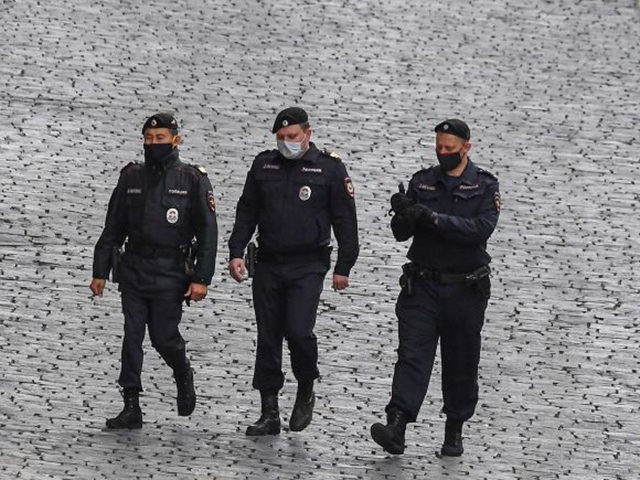
Russian Police Major Falls to Her Death After Testifying Against Former Boss


Russian police wearing face masks patrol in central Moscow on May 17, 2020, during a strict lockdown in Russia to stop the spread of the novel coronavirus COVID-19. (Photo by Yuri KADOBNOV / AFP) (Photo by YURI KADOBNOV/AFP via Getty Images)
YURI KADOBNOV/AFP via Getty Images

A female police major in Russia has become the latest person to mysteriously fall to their death from a window after testifying against her boss in a criminal extortion case, according to local media reports.

The Moscow Times reported Thursday that footage from security cameras showed the lifeless body of criminal investigation officer Yekaterina Mishkina, 37, having fallen from the fifth floor of a nine-floor apartment building in the far eastern city of Khabarovsk, over 8,000 kilometers from Moscow.

Although circumstances around her death currently remain unclear, security footage captured her unsuccessfully attempting to reach the building’s rooftop before going back down the stairs. Reports indicate that Mishkina may have been targeted after testifying as a witness in a criminal case against her former boss, who is facing extortion charges.

Khabarovsk regional police spokesperson Yekaterina Tarasova told Gubernia that the department would launch an internal investigation into Mishkina’s death, noting that her lead investigator was “on yet another vacation” at the time of her death.

One source involved in the investigation told local media that officials found a note in Mishkina’s purse laying out a number of tasks she needed to complete until a certain point.

“This indicates that what happened wasn’t spontaneous,” the source said, adding that she was a divorcee who left behind a 14-year-old daughter.

Mishkina’s death is the latest in a string of mysterious incidents where people who have upset or crossed the Russian government or other figures have ended up falling to their deaths. As Russia has grappled with the Chinese coronavirus in recent months, three healthcare workers have died in such a manner after having criticized the Kremlin’s handling of the pandemic.

Last month, a police lieutenant colonel also died after falling from the fifth floor of Moscow City Clinical Hospital. The circumstances leading up to her death are unclear, although she was described as a senior expert for the Forensic Center of the Interior Ministry, a government-run agency.

Many journalists and other dissidents have also found themselves falling to their deaths in suspicious circumstances. The most recent case was Maxim Borodin, a 32-year-old investigative journalist who was thrown out of a fourth-floor window in April 2018 after covering Russia’s military involvement in the Syrian Civil War.

User Clip: Ron Klain "Purely Fortuity" That More People Didn't Die During 09 Swine Flu

| Clip Of Pandemic and Biosecurity Policy Summit, Part 2 This clip, title, and description were not created by C-SPAN.


User-Created Clip
May 11, 2020

Ron Klain "Purely Fortuity" That More People Didn't Die During 09 Swine Flu

Report Video Issue
00:00:00

Unidentified Speaker

TO DO THAT KIND OF IMPORTANT WORK.

00:00:04

Unidentified Speaker

>> I HAVE A COUPLE OF THINGS. I WAS IN THE WHITE HOUSE IN 2009 AND 2010. I WAS WORKING FOR VICE PRESIDENT BIDEN. I WASN'T INVOLVED DIRECTLY IN THE H1N1 RESPONSE, AND I LIVED THROUGH IT AS A STAFFER A BUNCH OF REALLY TALENTED GREAT PEOPLE WORKING ON IT, AND WE DID EVERY POSSIBLE THING WRONG. 60 MILLION AMERICANS GOT H 1 N 1 DURING THAT TIME. IT HAD NOTHING TO DO WITH US DOING ANYTHING RIGHT. IT HAD TO DO WITH LUCK. IF ANYONE THINKS IT CAN'T HAPPEN AGAIN, THEY HAVE TO GO BACK TO 2009, 2010, IMAGINE A VIRUS WITH A

  • Monday, June 22, 2020

    EXCERPTS FROM RESOLUTION ON HISTORY OF MAO'S CONTRIBUTIONS AND MISTAKES

    Following are excerpts from the resolution on ''certain questions in the history of our party'' adopted by the Communist Party Central Committee, as made public today in English by the New China News Agency: Before the People's Republic

    In 1927, regardless of the resolute opposition of the left wing of the Kuomintang with Soong Ching-ling as its outstanding representative, the Kuomintang controlled by Chiang Kai-shek and Wang Jingwei betrayed the policies of Kuomintang-Communist cooperation and of anti-imperialists, massacred Communists and other revolutionaries. The party was still quite inexperienced and, moreover, was dominated by Chen Duxiu's right capitulationism, so that the revolution suffered a disastrous defeat under the surprise attack of a powerful enemy.

    However, our party continued to fight tenaciously. Launched under the leadership of Zhou Enlai and several other comrades, the Nanchang uprising of 1927 fired the opening shot for armed resistance against the Kuomintang reactionaries.

    The meeting of the Central Committee of the party held on Aug. 7, 1927, decided on the policy of carrying out agrarian revolution and organizing armed uprisings. Shortly afterwards, the autumn harvest and Canton uprisings and uprisings in many other areas were organized.

    Led by Comrade Mao Zedong, the autumn-harvest uprising in the Hunan-Jiangxi border area gave birth to the first division of the Chinese workers' and peasants' revolutionary army and to the first rural revolutionary base area in the Jinggang Mountains. The First, Second and Fourth Front Armies of the workers' and peasants' Red Army were also born, as were many other Red Army units.


    In the agrarian revolutionary war, the First Front Army of the Red Army and the central revolutionary base area under the direct leadership of Comrades Mao Zedong and Zhu De played the most important role. The Front Armies of the Red Army defeated a number of ''encirclement and suppression'' campaigns by the Kuomintang troops. But because of Wang Ming's left adventurist leadership, the struggle against the Kuomintang's fifth ''encirclement and suppression'' campaign ended in failure.

    The First Front Army was forced to embark on the Long March and made its way to northern Shaanxi to join forces with units of the Red Army, which had been persevering in struggles there and with its 25th Army, which had arrived earlier.

    In January 1935, the Political Bureau of the Central Committee of the party convened a meeting in Zunyi during the Long March, which established the leading position of Comrade Mao Zedong in the Red Army and the Central Committee of the party. This saved the Red Army and the Central Committee of the party, which were then in critical danger, and subsequently made it possible to defeat Zhang Guotao's splittism, bring the Long March to a triumphant conclusion and open up new vistas for the Chinese revolution. It was a vital turning point in the history of the party.

    At a time of national crisis of unparalleled gravity when the Japanese imperialists were intensifying their aggression against China, the Central Committee of the party headed by Comrade Mao Zedong decided on and carried out the correct policy of forming an anti-Japanese united front.

    During the war of resistance, the ruling clique of the Kuomintang continued to oppose the Communist Party and the people and was passive in resisting Japan. As a result, the Kuomintang suffered defeat after defeat in operations against the Japanese.

    Our party persevered in the policy of maintaining its independence and initiative within the united front, closely relied on the masses of the people, conducted guerrilla warfare behing enemy lines and set up many anti-Japanese base areas. The Eighth Route Army and the new Fourth Army - the reorganized Red Army - grew rapidly and became the mainstay in the war of resistance.

    Consequently, the Chinese people were able to hold out in the war for eight long years and win final victory in cooperation with the people of the Soviet Union and other countries.

    After the conclusion of the war of resistance against Japan, the Chiang Kai-shek Government, with the aid of U.S. imperialism, flagrantly launched an all-out civil war, disregarding the just demand of our party and the people for peace and democracy. Our party led the People's Liberation Army in fighting the three-year war of liberation. The end result was the overthrow of the reactionary Kuomintang Government and the establishment of the great People's Republic of China. The Chinese people had stood up.

    After the Victory in 1949

    From the inception of the People's Republic of China in October 1949 to 1956, our party led the whole people in gradually realizing the transition from new democracy to socialism, rapidly rehabilitating the economy, undertaking planned economic construction and in the main accomplishing the socialist transformation of the private ownership of the means of production in most of the country. The guidelines and basic policies defined by the party in this historical period were correct and led to brilliant successes.

    After the basic completion of socialist transformation, our party led the entire people in shifting our work to all-around, largescale socialist construction. In the 10 years preceding the Cultural Revolution we achieved big successes despite serious setbacks. By 1966, the value of fixed industrial assets, calculated on the basis of their original price, was four times that of 1956.

    In the course of this decade, there were serious faults and errors in the guidelines of the party's work, which developed through twists and turns.

    Nineteen fifty-seven was one of the years that saw best results in economic work after the founding of the People's Republic owing to the conscientious implementation of the correct line formulated at the 8th National Congress of the party. To start a rectification campaign throughout the party in that year and urge the masses to offer criticisms and suggestions were normal steps in developing socialist democracy. In the rectification campaign a handful of bourgeois rightists seized the opportunity to advocate what they called ''speaking out and airing views in a big way'' and to mount a wild attack against the party and the nascent socialist system in an attempt to replace the leadership of the Communist Party. It was therefore entirely correct and necessary to launch a resolute counterattack. But the scope of this struggle was made far too broad and a number of intellectuals, patriotic people and party cadres were unjustifiably labeled rightist, with unfortunate consequences.

    All the successes in these 10 years were achieved under the collective leadership of the Central Committee of the party headed by Comrade Mao Zedong. Likewise, responsibility for errors committed in the work of this period rested with the same collective leadership. Although Comrade Mao Zedong must be held chiefly responsible, we cannot lay the blame on him alone for all those errors. During this period, his theoretical and practical mistakes concerning class struggle in a socialist society became increasingly furious, his personal arbitrariness gradually undermined democratic centralism in party life, and the personality cult grew graver and graver. The Central Committee failed to rectify these mistakes in good time. Careerists like Lin Biao, Jiang Qing and Kang Sheng, harboring ulterior motives, made use of these errors and inflated them. This led to the inauguration of the Cultural Revolution.

    The Cultural Revolution

    The Cultural Revolution, which lasted from May 1966 to October 1976, was responsible for the most severe setback and the heaviest losses suffered by the party, the state and the people since the founding of the People's Republic.

    It was initiated and led by Comrade Mao Zedong. His principal theses were that many representatives of the bourgeoisie and counterrevolutionary revisionists had sneaked into the party, the Government, the army and cultural circles, and leadership in a fairly large majority of organizations and departments was no longer in the hands of Marxists and the people; that party persons in power taking the capitalist road had formed a bourgeois headquarters inside the Central Committee which pursued a revisionist political and organizational line and had agents in all provinces, municipalities and autonomous regions, as well as in all central departments; that since the forms of struggle adopted in the past had not been able to solve this problem, the power usurped by the capitalist-roaders could be recaptured only by carrying out a Great Cultural Revolution, by openly and fully mobilizing the broad masses from the bottom up to expose these sinister phenomena, and that the Cultural Revolution was in fact a great political revolution in which one class would overthrow another, a revolution that would have to be waged time and again.

    These theses appeared mainly in the May 16 Circular, which served as the programmatic document of the Cultural Revolution, and in the political report to the 9th National Congress of the party in April 1969. They were incorporated into a general theory - the theory of continued revolution under the dictatorship of the proletariat -which then took on a specific meaning.

    These erroneous left theses, upon which Comrade Mao Zedong based himself in initiating the Cultural Revolution, were obviously inconsistent with the system of Mao Zedong thought, which is the integration of the universal principles of Marxism-Leninism with the concrete practice of the Chinese revolution. These theses must be thoroughly distinguished from Mao Zedong thought.

    As for Lin Biao, Jiang Qing and others, who were placed in important positions by Comrade Mao Zedong, the matter is of an entirely different nature. They rigged up two counterrevolutionary cliques in an attempt to seize power and, taking advantage of Comrade Mao Zedong's errors, committed crimes behind his back, bringing disaster to the country and the people. Appraisal of the Situation

    The history of the Cultural Revolution has proved that Comrade Mao Zedong's theses for initiating it conformed neither to Marxism-Leninism nor to Chinese reality. They represent an entirely erroneous appraisal of the prevailing class relations and political situation in the party and state.

    The Cultural Revolution was defined as a struggle against the revisionist line or the capitalist road. There were no grounds at all for this definition. It led to the confusing of right and wrong on a series of important theories and policies. Many things denounced as revisionist or capitalist during the Cultural Revolution were actually Marxist and Socialist principles, many of which had been set forth or supported by Comrade Mao Zedong himself.

    The Cultural Revolution negated many of the correct princples, policies and achievements of the 17 years after the founding of the People's Republic. In fact, it negated much of the work of the Central Committee of the party and the people's Government, including Comrade Mao Zedong's own contribution. It negated the arduous struggles the entire people had conducted in socialist construction. No 'Great Order'

    The confusing of right and wrong inevitably led to confusing the people with the enemy. The capitalist-roaders overthrown in the Cultural Revolution were leading cadres of party and Government organizations who formed the core force of the socialist cause. The so-called bourgeois headquarters headed by Liu Shaoqi and Deng Xiaoping simply did not exist.

    Practice has shown that the Cultural Revolution did not in fact constitute a revolution or social progress in any sense, nor could it possibly have done so. It was we and not the enemy at all who were thrown into disorder by the Cultural Revolution. Therefore, from beginning to end, it did not turn ''great disorder under heaven'' into ''great order under heaven,'' nor could it conceivably have done so.

    History has shown that the Cultural Revolution, initiated by a leader laboring under a misapprehension and capitalized on by counterrevolutionary cliques, led to domestic turmoil and brought catastrophe to the party, the state and the whole people.

    Nominally, the Cultural Revolution was conducted by directly relying on the masses. In fact, it was divorced both from the party organizations and from the masses. After the movement started, party organizations at different levels were attacked and became partially or wholly paralyzed, the party's leading cadres at various levels were subjected to criticism and struggle, inner-party life came to a standstill and many activists and large numbers of the basic masses whom the party has long relied on were rejected. At the beginning of the Cultural Revolution, the vast majority of participants acted out of faith in Comrade Mao Zedong and the party.

    Except for a handful of extremists, however, they did not approve of launching ruthless struggles against leading party cadres. With the lapse of time, following their own circuitous paths, they eventually attained a heightened political consciousness and began to adopt a skeptical or wait-and-see attitude toward the Cultural Revolution, or even resisted and opposed it. Many people were assailed more or less severely for this very reason. Such a state of affairs could not but provide openings to be exploited by opportunists, careerists and conspirators, not a few of whom were rose to high or even key positions.

    In 1970-71 the counterrevolutionary Lin Biao clique plotted to capture power and attempted an armed counterrevolutionary coup. This was the outcome of the Cultural Revolution, which overturned a series of fundamental party principles. Objectively, it announced the failure of the theories and practices of the Cultural Revolution.

    Comrades Mao Zedong and Zhou Enlai ingeniously thwarted the plotted coup. Supported by Comrade Mao Zedong, Comrade Zhou Enlai took charge of the day-to-day work of the Central Committee and things began to improve in all fields. During the criticism and repudiation of Lin Biao in 1972, he correctly proposed criticism of the ultraleft trend of thought. In fact, this was an extension of the correct proposals put forward around February 1967 by many leading comrades of the Central Committee, who had called for the correction of the errors of the Cultural Revolution.

    Comrade Mao Zedong, however, erroneously held that the task was still to oppose the ultraright. The 10th Congress of the party perpetuated the left errors of the 9th Congress and made Wang Hongwen a vice chairman of the party. Jiang Qing, Zhang Chunqiao, Yao Wenyuan and Wang Hongwen formed a Gang of Four inside the Politburo of the Central Committee, thus strengthening the influence of the counterrevolutionary Jiang Qing clique.

    In 1975, when Comrade Zhou Enlai was seriously ill, Comrade Deng Xiaoping, with the support of Comrade Mao Zedong, took charge of the day-to-day work of the Central Committee. He convened an enlarged meeting of the Military Commission of the Central Committee and several other important meetings with a view to solving problems in industry, agriculture, transport and science and technology, and began to straighten out work in many fields so that the situation took an obvious turn for the better.

    However, Comrade Mao Zedong could not bear to accept systematic correction of the errors of the Cultural Revolution by Comrade Deng and counter the right deviationist trend to reverse correct verdicts, once again plunging the nation into turmoil. In January of that year, Comrade Zhou Enlai passed away. Comrade Zhou Enlai was utterly devoted to the party and the people and stuck to his post until his dying day. He found himself in an extremely difficult situation throughout the Cultural Revolution. He always kept the general interest in mind, bore the burden of office without complaint, racking his brains and untiringly endeavouring to keep the normal work of the party and the state going, to minimize the damage caused by the Cultural Revolution and to protect party and nonparty cadres. Tian An Men Incident

    He waged all forms of struggle to counter sabotage by the counterrevolutionary Lin Biao and Jiang Qing cliques. His death left the whole party and people in the most profound grief. In April of the same year, a powerful movement of protest signaled by the Tian An Men incident swept the whole country, a movement to mourn for the late Prime Minister Zhou Enlai and oppose the Gang of Four. In essence, the movement was a demonstration of support for the party's correct leadership as represented by Comrade Deng Xiaoping. It laid the ground for broad popular support for the subsequent overthrow of the counterrevolutionary Jiang Qing clique. The Politburo of the Central Committee and Comrade Mao Zedong wrongly assessed the nature of the Tian An Men incident and dismissed Comrade Deng Xiaoping from all his posts inside and outside the party.

    Chief responsibility for the grave left error of the Cultural Revolution, an error comprehensive in magnitude and protracted in duration, does indeed lie with Comrade Mao Zedong. But after all, it was the error of a great proletarian revolutionary. Comrade Mao Zedong paid constant attention to overcoming shortcomings in the life of the party and state. In his later years, however, far from making a correct analysis of many problems, he confused right and wrong and the people with the enemy during the Cultural Revolution. While making serious mistakes, he repeatedly urged the whole party to study the works of Marx, Engels and Lenin conscientiously and imagined that his theory and practice were Marxist and that they were essential for the consolidation of the dictatorship of the proletariat.

    Herein lies his tragedy. While persisting in the comprehensive error of the Cultural Revolution, he checked and rectified some of its specific mistakes, protected some leading party cadres and nonparty public figures and enabled some leading cadres to return to important leading posts. He led the struggle to smash the counterrevolutionary Lin Biao clique. He made major criticisms and exposures of Jiang Qing, Zhang Chunqiao and others, frustrating their sinister ambition to seize supreme leadership. All this was crucial to the subsequent and relatively painless overthrow of the Gang of Four by our party.

    In his later years, he still remained alert to safeguarding the security of our country, stood up to the pressure of the socialimperialists, pursued a correct foreign policy, firmly supported the just struggles of all peoples, outlined the correct strategy of the three worlds and advanced the important principle that China would never seek hegemony. During the Cultural Revolution our party was not destroyed but maintained its unity. The State Council and the Army were still able to do much of their essential work.

    The 4th National People's Congress, which was attended by deputies from all nationalities and all walks of life, was convened and it determined the composition of the State Council with Comrades Zhou Enlai and Deng Xiaoping as the core of its leadership. The foundation of China's socialist system remained intact and it was possible to continue economic construction. Our country remained united and exerted significant influence on world affairs.

    All these important facts are inseparable from the great role played by Comrade Mao Zedong. For these reasons, and particularly for his vital contributions to the cause of the revolution over the years, the Chinese people have always regarded Comrade Mao Zedong as their respected and beloved great leader and teacher.

    Comrade Mao Zedong's prestige reached a peak and he began to get arrogant at the very time when the party was confronted with the new task of shifting the focus of its work to socialist construction, a task for which the utmost caution was required. He gradually divorced himself from practice and from the masses, acted more and more arbitrarily and subjectively, and increasingly put himself above the Central Committee of the party. The result was a steady weakening and even undermining of the principle of collecive leadership and democratic centralism in the political life of the party and the country. This state of affairs took shape only gradually and the Central Committee of the party should be held partly responsible. From the Marxist viewpoint, this complex phenomenon was the product of given historical conditions. Blaming this on only one person or on only a handful of people will not provide a deep lesson for the whole party or enable it to find practical ways to change the situation. Accepted Personality Cult

    He tried to suppress the discussions on the criterion of truth unfolded in the country in 1978, which were very significant in setting things right. He procrastinated and obstructed the work of reinstating veteran cadres in their posts and redressing the injustices left over from the past (including the case of the Tian An Men incident of 1976). He accepted and fostered the personality cult around himself while continuing the personality cult of the past. The 11th National Congress of the Chinese Communist Party, convened in August 1977, played a positive role in exposing and repudiating the Gang of Four and mobilizing the whole party for building China into a powerful modern socialist state. However, owing to the limitations imposed by the historical conditions then and the influence of Comrade Hua Guofeng's mistakes, it reaffirmed the erroneous theories, policies and slogans of the Cultural Revoltuion instead of correcting them. He also had his share of responsibility for impetuously seeking quick results in economic work and for continuing certain other left policies. Obviously, under his leadership it is impossible to correct left errors within the party, and all the more impossible to restore the party's fine traditions.

    The victory won in overthrowing the counterrevolutionary Jiang Qing clique in October 1976 saved the party and the revolution from disaster and enabled our country to enter a new historical period of development. In the two years from October 1976 to December 1978 when the 3d plenary session of the 11th Central Committee of the party was convened, large numbers of cadres and oher people most enthusiastically devoted themselves to all kinds of revolutionary work and the task of construction.

    Comrades inside and outside the party demanded more and more strongly that the errors of the Cultural Revolution be corrected, but such demands met with resistance. This, of course, was partly due to the fact that the political and ideological confusion created in the Cultural Revolution could not be eliminated overnight, but it was also due to the left errors that Comrade Hua Guofeng continued to commit in his capacity as chairman of the Central Committee of the Chinese Communist Party. Naming of Hua Guofeng Recalled

    On the proposal of Comrade Mao Zedong, Comrade Hua Guofeng had become first vice chairman of the Central Committee of the party and concurrently Prime Minister of the State Council during the ''movement to criticize Deng Xiaoping'' in 1976. He contributed to the struggle to overthrow the counterrevolutionary Jiang Qing clique and did useful work after that. But he promoted the erroneous ''two whatevers'' policy, that is, ''We firmly uphold whatever policy decisions Chairman Mao made, and we unswervingly adhere to whatever instructions Chairman Mao gave,'' and he took a long time to rectify the error.

    Comrade Mao Zedong was a great Marxist and a great proletarian revolutionary, strategist and theorist. It is true that he made gross mistakes during the Cultural Revolution, but if we judge his activities as a whole, his contributions to the Chinese revolution far outweigh his mistakes. His merits are primary and his errors secondary. He rendered indelible meritorious service in founding and building up our party and the Chinese liberation of the oppressed nations of the world and to the progress of mankind.

    July 1, 1981, Page 00012Buy Reprints The New York Times Archives

    Tuesday, June 9, 2020

    The True Plight of Black Americans


    By Walter E. Williams June 9, 2020
    While it might not be popular to say in the wake of the recent social disorder, the true plight of black people has little or nothing to do with the police or what has been called "systemic racism." Instead, we need to look at the responsibilities of those running our big cities.
    Some of the most dangerous big cities are: St. Louis, Detroit, Baltimore, Oakland, Chicago, Memphis, Atlanta, Birmingham, Newark, Buffalo and Philadelphia. The most common characteristic of these cities is that for decades, all of them have been run by liberal Democrats. Some cities — such as Detroit, Buffalo, Newark and Philadelphia — haven't elected a Republican mayor for more than a half-century. On top of this, in many of these cities, blacks are mayors, often they dominate city councils, and they are chiefs of police and superintendents of schools.
    In 1965, there were no blacks in the U.S. Senate, nor were there any black governors. And only six members of the House of Representatives were black. As of 2019, there is far greater representation in some areas — 52 House members are black. Nine black Americans have served in the Senate, including Edward W. Brooke of Massachusetts, Carol Moseley Braun and Barack Obama of Illinois, Tim Scott of South Carolina, Cory Booker of New Jersey, and Kamala Harris of California. In recent times, there have been three black state governors. The bottom line is that today's black Americans have significant political power at all levels of government. Yet, what has that meant for a large segment of the black population?
    Democratic-controlled cities have the poorest-quality public education despite their large, and growing, school budgets. Consider Baltimore, Maryland. In 2016, in 13 of Baltimore's 39 high schools, not a single student scored proficient on the state's math exam. In six other high schools, only 1% tested proficient in math. Only 15% of Baltimore students passed the state's English test. That same year in Philadelphia only 19% of eighth-graders scored proficient in math, and 16% were proficient in reading. In Detroit, only 4% of its eighth-graders scored proficient in math, and 7% were proficient in reading. It's the same story of academic disaster in other cities run by Democrats.
    Violent crime and poor education is not the only problem for Democratic-controlled cities. Because of high crime, poor schools and a less pleasant environment, cities are losing their economic base and their most productive people in droves. When World War II ended, the population of Washington, D.C., was about 800,000; today, it's about 700,000. In 1950, Baltimore's population was almost 950,000; today, it's around 590,000. Detroit's 1950 population was close to 1.85 million; today, it's down to 673,000. The population of Camden, New Jersey, in 1950 was nearly 125,000; today it has fallen to 74,000. St. Louis' 1950 population was more than 856,000; today, it's less than 294,000. A similar story of population decline can be found in most of our formerly large and prosperous cities. In some cities, the population decline since 1950 is well over 50%, and that includes Detroit, St. Louis, Cleveland and Pittsburgh.
    Academic liberals, civil rights advocates and others blamed the exodus on racism — "white flight" to the suburbs to avoid blacks. But blacks have been fleeing some cities at higher rates than whites. The five cities whose suburbs have the fastest-growing black populations are Miami, Dallas, Washington, Houston and Atlanta. It turns out that blacks, like whites, want better and safer schools for their kids and don't like to be mugged or have their property vandalized. And like white people, if they have the means, black people cannot wait to leave troubled cities.
    White liberals and black politicians focus most of their attention on what the police do, but how relevant is that to the overall tragedy? According to Statista, this year, 172 whites and 88 blacks have died at the hands of police. To put police shootings in a bit of perspective, in Chicago alone in 2020 there have been 1,260 shootings and 256 homicides with blacks being the primary victims. That comes to one shooting victim every three hours and one homicide victim every 15 hours. Three people in Chicago have been killed by police. If one is truly concerned about black deaths, shootings by police should figure way down on one's list — which is not to excuse bad behavior by some police officers.
    Walter E. Williams is a professor of economics at George Mason University.