Tuesday, September 22, 2020

WSJ Opinion: Suddenly, the Supreme Court Dominates the Election

Breaking Judicial Norms: A History

A Democratic Senate pattern, from Bork to the filibuster rule.

By
WSJ Opinion: Suddenly, the Supreme Court Dominates the Election
You may also lik
Journal Editorial Report: Who benefits from a fight over Ginsburg's successor? Images: AFP via Getty Images Composite: Mark Kelly
Senate Minority Leader Chuck Schumer is widely reported to have told his Democratic colleagues on Saturday that “nothing is off the table for next year” if Republicans confirm a Supreme Court nominee in this Congress. He means this as a threat that Democrats will break the filibuster and pack the Court with more Justices in 2021 if they take control of the Senate in November’s election. So what else is new? Democrats have a long history of breaking procedural norms on judges. While packing the Court would be their most radical decision to date, it would fit their escalating pattern. Let’s review the modern historical lowlights to see which party has really been the political norm-breaker:
• The Bork assault. When Ronald Reagan selected Robert Bork in 1987, the judge was among the most qualified ever nominated. No less than Joe Biden had previously said he might have to vote to confirm him. Then Ted Kennedy issued his demagogic assault from the Senate floor, complete with lies about women “forced into back-alley abortions” and blacks who would have to “sit at segregated lunch counters.” Democrats and the press then unleashed an unprecedented political assault.
Previous nominees who had failed in the Senate were suspected of corruption (Abe Fortas) or thought unqualified (Harrold Carswell). Bork was defeated because of distortions about his jurisprudence. This began the modern era of hyper-politicized judicial nominations, though for the Supreme Court it has largely been a one-way partisan street.
No Democratic nominee has been borked, to use the name that became a verb. Even Justice Sonia 
Sotomayor, whose left-wing legal views were obvious upon her nomination, received a respectful GOP hearing and was confirmed 68-31 with nine GOP votes. Justice Ruth Bader Ginsburg was confirmed 96-3, Stephen Breyer 87-9, and Elena Kagan 63-37.
Democrats, meanwhile, have escalated to character assassination. Clarence Thomas was unfairly smeared on the eve of a Senate vote and barely confirmed. Democrats accused Samuel Alito of racism and sexism for belonging decades earlier to an obscure Princeton alumni group.
Democrats promoted the uncorroborated claims of women accusers against Brett Kavanaugh from his high school and college years. Sen. Sheldon Whitehouse undertook a deep dive into Justice Kavanaugh’s high-school yearbook. This treatment has become the real Democratic Party “norm.”
• Filibustering appellate nominees. It’s mostly forgotten now, but in George W. Bush’s first term Senate Democrats pioneered the use of the filibuster to block nominees to the circuit courts. That was also unprecedented.
Miguel Estrada was left hanging for 28 months before he withdrew, though he had support from 55 Senators. A 2001 Judiciary Committee memo to Sen. Dick Durbin was candid in urging opposition to Mr. Estrada because “he is Latino” and couldn’t be allowed to reach the D.C. Circuit Court of Appeals lest he later become a candidate for the Supreme Court.
Democrats also filibustered or otherwise blocked appellate nominees Priscilla Owen, Janice Rogers Brown, Charles Pickering Sr., Henry Saad, Carolyn Kuhl, William Pryor, David McKeague, Richard Griffin and William Myers, among others.
This violation of norms was stopped only after the GOP regained the majority and threatened to change Senate rules. A handful of Senators in both parties then negotiated a deal to vote for nominees except in “extraordinary circumstances.” Republicans did not unilaterally break the filibuster for judicial nominees.
• Breaking the filibuster for appellate nominees. That norm-breaker was executed by Democrats in 2013, led by then Majority Leader Harry Reid with the enthusiastic support of Barack Obama. Democrats rewrote Senate rules in mid-Congress, on a party-line vote, to add three seats to the D.C. Circuit. The goal was to stack that court with liberals who would rubber stamp Mr. Obama’s “pen” and “phone” regulatory diktats.
Those liberals have done that numerous times, while sometimes blocking President Trump’s deregulatory rule-makings. But the political cost has been high, as we warned at the time. Harry Reid’s precedent allowed GOP leader Mitch McConnell to do the same when Democrats tried to filibuster Neil Gorsuch. The GOP majority can now confirm Mr. Trump’s next nominee with 51 votes.

***

Urged on by the progressive media, Democrats are now vowing that they’ll break the 60-vote legislative filibuster rule to add two, or even four, new Justices to the Supreme Court next year for a total of 11 or 13. But they have already been saying this for months. Barack Obama gave the green light when he used John Lewis’s funeral to call the filibuster a “Jim Crow relic.” Never mind that as a Senator he endorsed a filibuster of Mr. Alito. Mr. Whitehouse and four colleagues explicitly threatened in an amicus brief that the Court would be “restructured” if Justices rule the wrong way.
Republicans could surrender and not confirm a nominee, and Senate Democrats would still break the filibuster. Court packing would then become a sword hanging over the Justices if they rule contrary to the policy views of the Senate left. Leader Schumer won’t resist because he is quaking at the prospect of a primary challenge from Rep. Alexandria Ocasio-Cortez in 2022.
Contrast this Democratic record, and now this court-packing threat, with the GOP record. In 2016 Mitch McConnell and his colleagues refused to confirm Merrick Garland and said the voters should decide the issue in the election. Mr. Schumer had previously vowed the same standard in the final years of George W. Bush. Mr. McConnell essentially made a political bet by putting judicial philosophy and the Supreme Court at the center of the 2016 campaign.
Judges were also on the Senate ballot in 2018 after the Kavanaugh ugliness. The GOP gained two net seats. The use of their elected Senate power now to confirm a nominee would be a wholly legitimate use of their constitutional authority. They should not be cowed by Democratic threats from confirming a nominee. Democrats have shown they will do what they want with Senate power no matter what Republicans do now.
What Republicans should do is let the voters know about the Democratic filibuster and court-packing plans, and make them a campaign issue. Democratic Senators and candidates should have to declare themselves not merely on Mr. Trump’s nominee but on the filibuster and court-packing that Mr. Schumer has now told the country will be on the table.
Copyright ©2020 Dow Jones & Company, Inc. All Rights Reserved. 87990cbe856818d5eddac44c7b1cdeb8
Appeared in the September 21, 2020, print edition.

 

Classic Grind: The one where Mario meant to shoot the puck precisely where he did


By Dejan Kovacevic 

Each Saturday during the ongoing apocalypse, I’ll revisit an older column that ran on this site, accompanied by a handful of current observations about it at the bottom.


This one ran in the Post-Gazette on Feb. 18, 2003:

If not for one timely error by the Penguins, Mario Lemieux might not have found himself wide open with the puck on his stick, cradling a golden chance to decide the game in overtime.

"We were all messed up," defenseman Joel Bouchard said after the 4-3 victory against the Edmonton Oilers last night at Mellon Arena. "All of us were on the wrong side."

But it still turned out just right for a team that desperately needs every bit of fortune it can find.

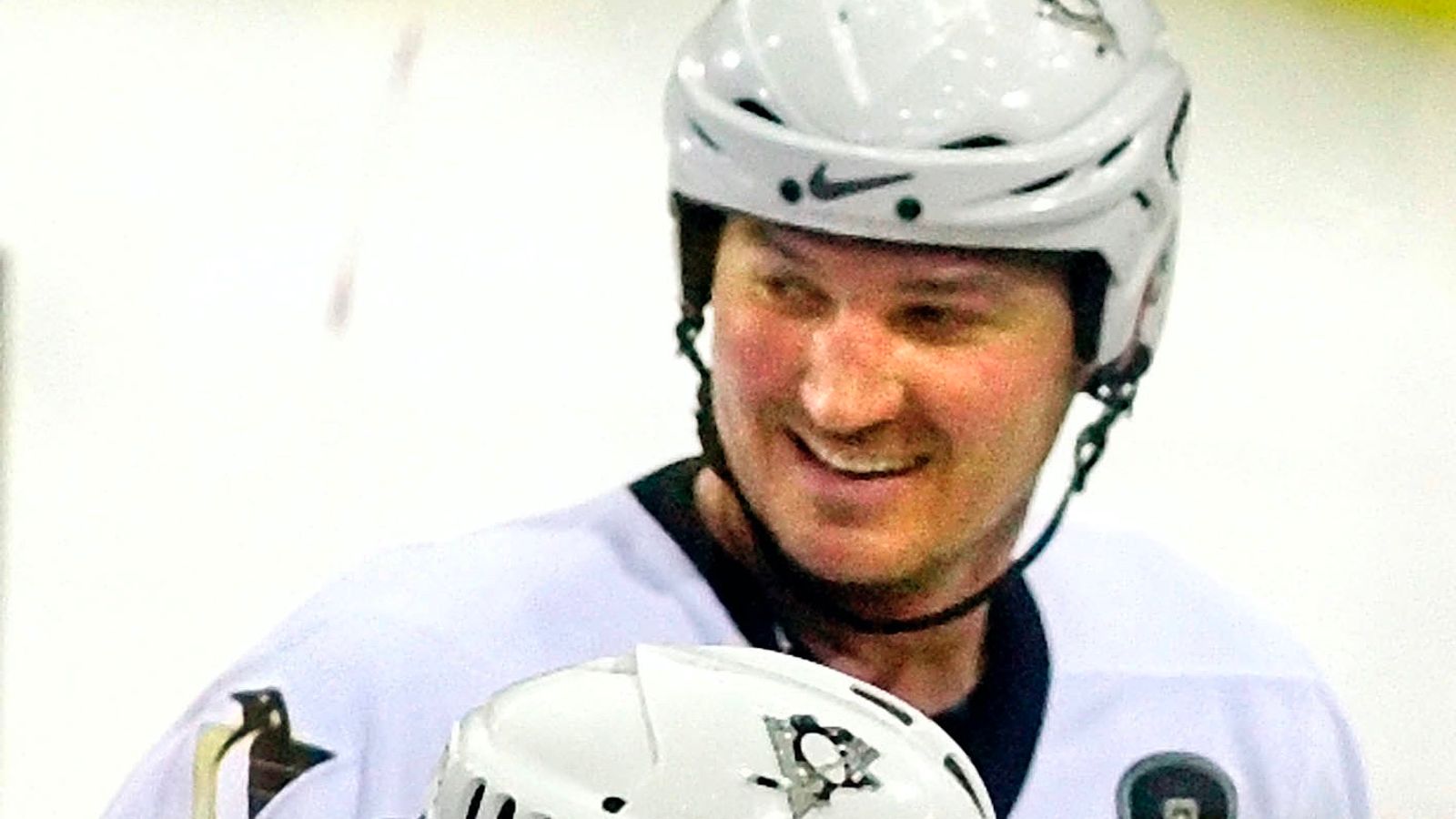
Mario Lemieux celebrates his OT goal with Ville Nieminen, Feb. 18, 2003. - AP


The Penguins were awarded a power play 53 seconds into the extra period, center Randy Robitaille drawing a tripping minor by Oilers defenseman Alexei Semenov. Because of the overtime rules, it was four-on-three, meaning plenty of open ice, but no one could have anticipated how much open ice Lemieux was about to receive. Not even Lemieux.

When the Penguins gained the Edmonton blue line, Lemieux and Bouchard crisscrossed awkwardly, leaving Bouchard with the puck on the left side and Lemieux on the right, exactly the opposite of the plan.

"I looked at Mario, and he looked back at me," Bouchard said. "We got inverted, but I could tell right away that he just wanted all of us to stay where we were."

The Penguins stayed put, but so did Edmonton's penalty-killers, and that hurt the Oilers. Center Marty Reasoner was the lone forward, and he continued to follow his assignment of favoring the right side, where Lemieux was supposed to be.

"I think they got mixed up for a second," Lemieux said. "They thought I was going to be on the other side to set up, and they kind of sat back a little too much."

Bouchard sent the puck to the right boards, where Lemieux and left winger Rico Fata nearly collided. Fata caught the pass but instantly dished to Lemieux.

"That was a hot potato for me," Fata said. "I just wanted to give it to Mario, get out of his way and go to the net."

Lemieux took Fata's pass and stopped above the right circle, the clock seemingly freezing with him. He looked at his teammates, took one stride forward, put his head down and unleashed a powerful slap shot that zipped between Fata's legs and landed inside the far post behind Edmonton goaltender Tommy Salo at 1:35.

"Perfect shot," Fata said.

"Unbelievable placement," Bouchard said.

Those who were on the bench at the time shared in the praise.

"You give a normal guy that much time and space, maybe someone else would crumble and just dump it into the corner or something," left winger Steve McKenna said. "Not that guy. We all knew where it was going."

The opposition chimed in, too.

"He hammered it," Oilers coach Craig MacTavish said. "Pulverized the thing."

Lemieux laughed when asked if he spotted an opening behind Salo.

"I saw short side and went far side," he said, failing to stifle a grin. "No, I saw the far side. I got lucky."

Lemieux's overtime goal was the 11th of his career, and he ranks third among active NHL players in that category. But it was his first since Feb. 21, 2001, in a 3-2 home victory against the Florida Panthers, which explains his jubilant celebration with teammates in the moments after scoring.

"Yeah, it's been a long time," Lemieux said. "To get that feeling back, to still be able to do it. ... It was nice when it went in."

Bouchard felt as much relief as joy.

"I'm just glad it all worked out," he said. "Whatever it takes to get the puck on Mario's stick in that situation, that's fine."

____________________


As promised, a few remarks:

• I've got a very specific reason for choosing this piece from my days on the NHL beat at the Post-Gazette, and it's got not all that much to do with the goal itself.

Let's start here: Mario's got a spectacular, dry sense of humor.

When this OT started, I left my seat in the Mellon Arena press box to go stand in one of the two steep, exposed stairwells to either side. This way, I'd have a better view, a better feel if the Penguins would score. So I was pretty much overhead, not all that far from Lemieux's own perspective at the right point when those lousy Oilers thought it'd be smart to offer him an acre of ice from which to pick his spot on poor Salo.

And that, of course, is what he did. He spotted the space inside the far post and, as MacTavish elegantly put it, he 'hammered' it, 'pulverized' it.

Which made no sense to me. Even as someone who'd marveled at all of Mario's career. I mean, he'd played a fair amount of point on the power play but, as described in the piece above, that was almost always on the left side. And yet, he glides forward, sizes up Salo, sees something, and blasts it by him like he's Al MacInnis.

Sorry, that made no sense to me.

Wait, here comes the other part where I sound stupid: So I hurry down to the locker room afterward, interview all the people you see up there -- with a focus on Bouchard to explain why they'd switched points -- then waited with the usual group for 66. At which point I ask maybe the dumbest single question of my career: "Did you see something far side?"

To which Mario jabs back with what you see above: "I saw short side and went far side," before pausing, grinning and finishing, "No, I saw the far side. I got lucky."

Ow.

I was still fairly new to the beat and, damn, I wanted to die in that moment. To just drop dead.

We get back upstairs, Dave Molinari and I, and I finally summon the courage to ask Dave what had just happened down there. And Dave, who'd covered nearly every game Mario had ever played, came back bluntly as ever: "I think he got tired a long time ago of being asked if he meant to do what he just did."

Oh.

Double-ow.

Two powerful lessons were learned by the young reporter on that night:

1. Never doubt Mario.

He was the best at absolutely everything, and there wasn't anything on the ice he couldn't do.

2. Never doubt greatness.

Across the board, across all sports, I'd always presume after that event that a truly great player was eminently capable of whatever I'd just witnessed. And I applied this beyond just the Pittsburgh teams or the obvious candidates like Sidney Crosby, Evgeni Malkin, Ben Roethlisberger, Andrew McCutchen and so forth. I applied it to the other guys, as well. So when Rob Gronkowski steamrollered the Steelers, despite Sean Davis blanketing him, Gronk was the one who'd get my benefit of the doubt. When the Penguins lost their three-peat chance against the Capitals in 2018, I saw it far more from the perspective of a terrific Washington team that wound up finally winning it all. When the Pirates' 2014 wild-card team was wiped away by Madison Bumgarner, I was more moved by his performance than that of the home team. Because he really was that great.

• Yeah, I tried to find a video of this goal. Couldn't. Anywhere. If you turn one up, give a shout in comments, and I'll try to add it.

• UPDATE: Longtime reader Clint Novak found it:

https://player.vimeo.com/video/431349374?background=1

 
Thanks, my man!

• There really wasn't much room there. A defenseman who'd spent his whole career shooting from that spot, you'd expect to be able to nail it. Not a forward.

Sorry, there I go again.

• What makes Mario the greatest player who ever lived is precisely what's above: He could do almost everything better than most everyone. Big, fast, supremely skilled, vision without parallel, and a comparable drive to prove all of that. In hockey terms, he had uncommon grace and elegance on his skates for a big man, Wayne Gretzky's vision and passing, and a finishing touch to match. Gretzky had only the middle of those three.

Viktor Tikhonov, the legendary coach of the old Soviet teams, labeled Mario 'the greatest goal-scorer I've ever seen,' and it seemed to jar people at the time. This was in 1987 after Mario and Gretzky took down the Soviets in the historic Canada Cup final in Hamilton, Ontario, with 66 scoring the winners in the final two games, both on assists from 99. Most of us had thought of Mario as a passer first, maybe because it seemed unfair that he'd also come equipped with the same ability to finish.

No one's ever been better at this sport.

• Man, my remarks about the piece are longer than the piece itself!

Back to wishing for actual hockey soon!


Tuesday, September 8, 2020

Neowise


Neowise

                                                       Jupiter and Europa

Monday, August 24, 2020

Transcript of Reagan's Farewell Address to American People

 Jan. 12, 1989

My fellow Americans, this is the 34th time I'll speak to you from the Oval Office, and the last. We've been together eight years now, and soon it'll be time for me to go. But before I do, I wanted to share some thoughts, some of which I have been saving for a long time.

It's been the honor of my life to be your President. So many of you have written the past few weeks to say thanks, but I could say as much to you. Nancy and I are grateful for the opportunity you gave us to serve.

One of the things about the Presidency is that you're always somewhat apart. You spend a lot of time going by too fast in a car someone else is driving, and seeing the people through tinted glass - the parents holding up a child, and the wave you saw too late and couldn't return. And so many times I wanted to stop, and reach out from behind the glass, and connect. Well, maybe I can do a little of that tonight.

People ask how I feel about leaving, and the fact is parting is "such sweet sorrow." The sweet part is California, and the ranch, and freedom. The sorrow? The goodbyes, of course, and leaving this beautiful place.

You know, down the hall and up the stairs from this office is the part of the White House where the President and his family live. There are a few favorite windows I have up there that I like to stand and look out of early in the morning. The view is over the grounds here to the Washington Monument, and then the Mall, and the Jefferson Memorial. But on mornings when the humidity is low, you can see past the Jefferson to the river, the Potomac, and the Virginia shore. Someone said that's the view Lincoln had when he saw the smoke rising from the battle of Bull Run. Well, I see more prosaic things: the grass on the banks, the morning traffic as people make their way to work, now and then a sailboat on the river. Reflections at a Window

I've been thinking a bit at that window. I've been reflecting on what the past eight years have meant, and mean. And the image that comes to mind like a refrain is a nautical one - a small story about a big ship, and a refugee, and a sailor.

It was back in the early Eighties, at the height of the boat people, and the sailor was hard at work on the carrier Midway, which was patrolling the South China Sea. The sailor, like most American servicemen, was young, smart and fiercely observant. The crew spied on the horizon a leaky little boat - and crammed inside were refugees from Indochina hoping to get to America. The Midway sent a small launch to bring them to the ship, and safety. As the refugees made their way through the choppy seas, one spied the sailor on deck, and stood up and called out to him. He yelled, "Hello, American sailor - Hello, Freedom Man."

A small moment with a big meaning, a moment the sailor, who wrote it in a letter, couldn't get out of his mind. And, when I saw it, neither could I.

Because that's what it has to - it was to be an American in the 1980's; We stood, again, for freedom. I know we always have but in the past few years the world - again, and in a way, we ourselves - rediscovered it.

It's been quite a journey this decade, and we held together through some stormy seas. And at the end, together, we are reaching our destination.

The fact is, from Grenada to the Washington and Moscow summits, from the recession of '81 to '82 to the expansion that began in late '82 and continues to this day, we've made a difference. Two Great Triumphs

The way I see it, there were two great triumphs, two things that I'm proudest of. One is the economic recovery, in which the people of America created - and filled - 19 million new jobs. The other is the recovery of our morale: America is respected again in the world, and looked to for leadership.

Something that happened to me a few years ago reflects some of this. It was back in 1981, and I was attending my first big economic summit, which was held that year in Canada. The meeting place rotates among the member countries. The opening meeting was a formal dinner for the heads of government of the seven industrialized nations. Well, I sat there like the new kid in school and listened, and it was all Francois this and Helmut that. They dropped titles and spoke to one another on a first-name basis. Well, at one point I sort of leaned in and said, "My name's Ron."

Well, in that same year, we began the actions we felt would ignite an economic comeback: cut taxes and regulation, started to cut spending. Soon the recovery began.

Two years later, another economic summit, with pretty much the same cast. At the big opening meeting, we all got together, and all of a sudden just for a moment I saw that everyone was just sitting there looking at me. And then one of them broke the silence. "Tell us about the American miracle," he said.

Well, back in 1980, when I was running for President, it was all so different. Some pundits said our programs would result in catastrophe. Our views on foreign affairs would cause war, our plans for the economy would cause inflation to soar and bring about economic collapse. I even remember one highly respected economist saying, back in 1982, that "The engines of economic growth have shut down here and they're likely to stay that way for years to come."

Well, he - and the other "opinion leaders" - were wrong. The fact is, what they called "radical" was really "right"; what they called "dangerous" was just "desperately needed." 'The Great Communicator'

And in all that time I won a nickname - "The Great Communicator." But I never thought it was my style or the words I used that made a difference - it was the content. I wasn't a great communicator, but I communicated great things, and they didn't spring full bloom from my brow, they came from the heart of a great nation - from our experience, our wisdom, and our belief in the principles that have guided us for two centuries.

They called it the Reagan Revolution, and I'll accept that, but for me it always seemed more like the Great Rediscovery: a rediscovery of our values and our common sense.

Common sense told us that when you put a big tax on something, the people will produce less of it. So we cut the people's tax rates, and the people produced more than ever before. The economy bloomed like a plant that had been cut back and could now grow quicker and stronger. Our economic program brought about the longest peacetime expansion in our history: real family income up, the poverty rate down, entrepreneurship booming and an explosion in research and new technology. We're exporting more now than ever because American industry became more competitive, and at the same time we summoned the national will to knock down protectionist walls abroad instead of erecting them at home.

Common sense also told us that to preserve the peace we'd have to become strong again after years of weakness and confusion. So we rebuilt our defenses - and this New Year we toasted the new peacefulness around the globe. Not only have the superpowers actually begun to reduce their stockpiles of nuclear weapons - and hope for even more progress is bright - but the regional conflicts that rack the globe are also beginning to cease. The Persian Gulf is no longer a war zone, the Soviets are leaving Afghanistan, the Vietnamese are preparing to pull out of Cambodia and an American-mediated accord will soon send 50,000 Cuban troops home from Angola. 'We Changed a World'

The lesson of all this was, of course, that because we're a great nation, our challenges seem complex. It will always be this way. But as long as we remember our first principles and believe in ourselves, the future will always be ours.

And something else we learned: once you begin a great movement, there's no telling where it'll end. We meant to change a nation, and instead, we changed a world.

Countries across the globe are turning to free markets and free speech - and turning away from the ideologies of the past. For them, the Great Rediscovery of the 1980's has been that, lo and behold, the moral way of government is the practical way of government. Democracy, the profoundly good, is also the profoundly productive.

When you've got to the point where you can celebrate the anniversaries of your 39th birthday you can sit back sometimes, review your life and see it flowing before you. For me, there was a fork in the river, and it was right in the middle of my life.

I never meant to go into politics: it wasn't my intention when I was young. But I was raised to believe you had to pay your way for the blessings bestowed on you. I was happy with my career in the entertainment world, but I ultimately went into politics because I wanted to protect something precious. 'We the People'

Ours was the first revolution in the history of mankind that truly reversed the course of government, and with three little words: "We the People."

"We the People" tell the Government what to do, it doesn't tell us. "We the people" are the driver - the Government is the car. And we decide where it should go, and by what route, and how fast. Almost all the world's constitutions are documents in which governments tell the people what their privileges are. Our Constitution is a document in which "We the People" tell the Government what it is allowed to do. "We the people" are free.

This belief has been the underlying basis for everything I tried to do these past eight years.

But back in the 1960's when I began, it seemed to me that we'd begun reversing the order of things - that through more and more rules and regulations and confiscatory taxes, the Government was taking more of our freedom. I went into politics in part to put up my hand and say, "Stop!" I was a citizen-politician, and it seemed the right thing for a citizen to do.

I think we have stopped a lot of what needed stopping. And I hope we have once again reminded people that man is not free unless government is limited. There's a clear cause and effect here that is as neat and predictable as a law of physics: as government expands, liberty contracts. Actions Based on Deeds

Nothing is less free than pure communism, and yet we have, the past few years, forged a satisfying new closeness with the Soviet Union. I've been asked if this isn't a gamble, and my answer is no, because we're basing our actions not on words but deeds.

The detente of the 1970's was based not on actions but promises. They'd promise to treat their own people and the people of the world better, but the gulag was still the gulag, and the state was still expansionist, and they still waged proxy wars in Africa, Asia and Latin America.

Well, this time, so far, it's different: President Gorbachev has brought about some internal democratic reforms and begun the withdrawal from Afghanistan. He has also freed prisoners whose names I've given him every time we've met.

But life has a way of reminding you of big things through small incidents. Once, during the heady days of the Moscow Summit, Nancy and I decided to break off from the entourage one afternoon to visit the shops on Arbat Street - that's a little street just off Moscow's main shopping area.

Even though our visit was a surprise, every Russian there immediately recognized us, and called out our names and reached for our hands. We were just about swept away by the warmth - you could almost feel the possibilities in all that joy. But within seconds, a K.G.B. detail pushed their way toward us and began pushing and shoving the people in the crowd. It was an interesting moment. It reminded me that while the man on the street in the Soviet Union yearns for peace, the Government is Communist - and those who run it are Communists - and that means we and they view such issues as freedom and human rights very differently. 'Keep Up Our Guard'

We must keep up our guard - but we must also continue to work together to lessen and eliminate tension and mistrust.

My view is that President Gorbachev is different from previous Soviet leaders. I think he knows some of the things wrong with his society and is trying to fix them. We wish him well. And we'll continue to work to make sure that the Soviet Union that eventually emerges from this process is a less threatening one.

What it all boils down to is this: I want the new closeness to continue. And it will as long as we make it clear that we will continue to act in a certain way as long as they continue to act in a helpful manner. If and when they don't - at first pull your punches. If they persist, pull the plug.

It's still trust - but verify.

It's still play - but cut the cards.

It's still watch closely - and don't be afraid to see what you see.

I've been asked if I have any regrets. Well, I do.

The deficit is one. I've been talking a great deal about that lately, but tonight isn't for arguments, and I'm going to hold my tongue.

But an observation: I've had my share of victories in the Congress, but what few people noticed is that I never won anything you didn't win for me. They never saw my troops; they never saw Reagan's Regiments, the American people. You won every battle with every call you made and letter you wrote demanding action. Much to Be Done

Well, action is still needed. If we're to finish the job, of Reagan's Regiments, we'll have to become the Bush Brigades. Soon he'll be the chief, and he'll need you every bit as much as I did.

Finally, there is a great tradition of warnings in Presidential farewells, and I've got one that's been on my mind for some time.

But oddly enough it starts with one of the things I'm proudest of in the past eight years; the resurgence of national pride that I called "the new patriotism." This national feeling is good, but it won't count for much, and it won't last unless it's grounded in thoughtfulness and knowledge.

An informed patriotism is what we want. And are we doing a good enough job teaching our children what America is and what she represents in the long history of the world?

Those of us who are over 35 or so years of age grew up in a different America. We were taught, very directly, what it means to be an American, and we absorbed almost in the air a love of country and an appreciation of its institutions. If you didn't get these things from your family you got them from the neighborhood, from the father down the street who fought in Korea or the family who lost someone at Anzio. Or you could get a sense of patriotism from school. And if all else failed, you could get a sense of patriotism from the popular culture. The movies celebrated democratic values and implicitly reinforced the idea that America was special. TV was like that, too, through the mid-Sixties. Ahead, to the Nineties

But now we're about to enter the Nineties, and some things have changed. Younger parents aren't sure that an unambivalent appreciation of America is the right thing to teach modern children. And as for those who create the popular culture, well-grounded patriotism is no longer the style.

Our spirit is back, but we haven't reinstitutionalized it. We've got to do a better job of getting across that America is freedom - freedom of speech, freedom of religion, freedom of enterprise - and freedom is special and rare. It's fragile; it needs protection.

We've got to teach history based not on what's in fashion but what's important: Why the pilgrims came here, who Jimmy Doolittle was, and what those 30 seconds over Tokyo meant. You know, four years ago, on the 40th anniversary of D-Day. I read a letter from a young woman writing to her late father, who'd fought on Omaha Beach. Her name was Lisa Zanatta Henn, and she said, we will always remember, we will never forget what the boys of Normandy did. Well, let's help her keep her word.

If we forget what we did, we won't know who we are. I am warning of an eradication of that - of the American memory that could result, ultimately, in an erosion of the American spirit.

Let's start with some basics - more attention to American history and a greater emphasis of civic ritual. And let me offer lesson No. 1 about America : All great change in America begins at the dinner table. So tomorrow night in the kitchen I hope the talking begins. And children, if your parents haven't been teaching you what it means to be an American - let 'em know and nail 'em on it. That would be a very American thing to do.

And that's about all I have to say tonight. Except for one thing.

The past few days when I've been at that window upstairs, I've thought a bit of the shining "city upon a hill." The phrase comes from John Winthrop, who wrote it to describe the America he imagined. What he imagined was important, because he was an early Pilgrim - an early "Freedom Man." He journeyed here on what today we'd call a little wooden boat, and, like the other pilgrims, he was looking for a home that would be free.

I've spoken of the shining city all my political life, but I don't know if I ever quite communicated what I saw when I said it. But in my mind, it was a tall proud city built on rocks stronger than oceans, wind swept, God blessed, and teeming with people of all kinds living in harmony and peace - a city with free ports that hummed with commerce and creativity, and if there had to be city walls, the walls had doors, and the doors were open to anyone with the will and the heart to get here.

That's how I saw it, and see it still. How Stands the City?

And how stands the city on this winter night? More prosperous, more secure and happier than it was eight years ago. But more than that: after 200 years, two centuries, she still stands strong and true on the granite ridge, and her glow has held steady no matter what storm.

And she's still a beacon, still a magnet for all who must have freedom, for all the Pilgrims from all the lost places who are hurtling through the darkness, toward home.

We've done our part. And as I "walk off into the city streets," a final word to the men and women of the Reagan Revolution - the men and women across America who for eight years did the work that brought America back:

My friends, we did it. We weren't just marking time, we made a difference. We made the city stronger - we made the city freer - and we left her in good hands.

All in all, not bad. Not bad at all.

And so, goodbye.

God bless you. And God bless the United States of America.